I grew up in a home where when things broke, they stayed broken.
We didn’t fix them. We worked around them. We learned how to live without.
It wasn’t so much a mindset problem—it was a money problem. And over time, it became both.
And without realizing it, I carried that way of thinking—living—into my own life.
A few years back, my husband and I bought a house with its original appliances. We knew they were on borrowed time and that we would eventually need to replace them.
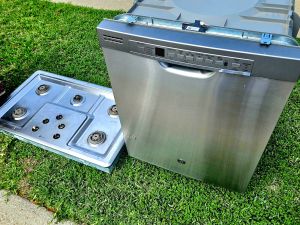
Three years later, the dishwasher began singing tunes of despair, warning us. But the warnings stopped.
But resourceful me found a work around: unplug it and plug it back in.(Clearly not just for computers.)
So that’s what I did for a year and a half. Every day I plopped myself onto the floor, reached far under my kitchen sink, and unplugged that dishwasher.
Sometimes once.
Sometimes five times. Once or twice as many as ten.
Because—Im just that stubborn. And I was getting by.
But one afternoon, things went terribly wrong in another part of my kitchen.
While cleaning the gas stovetop, a burner began clicking—though I had turned nothing on.
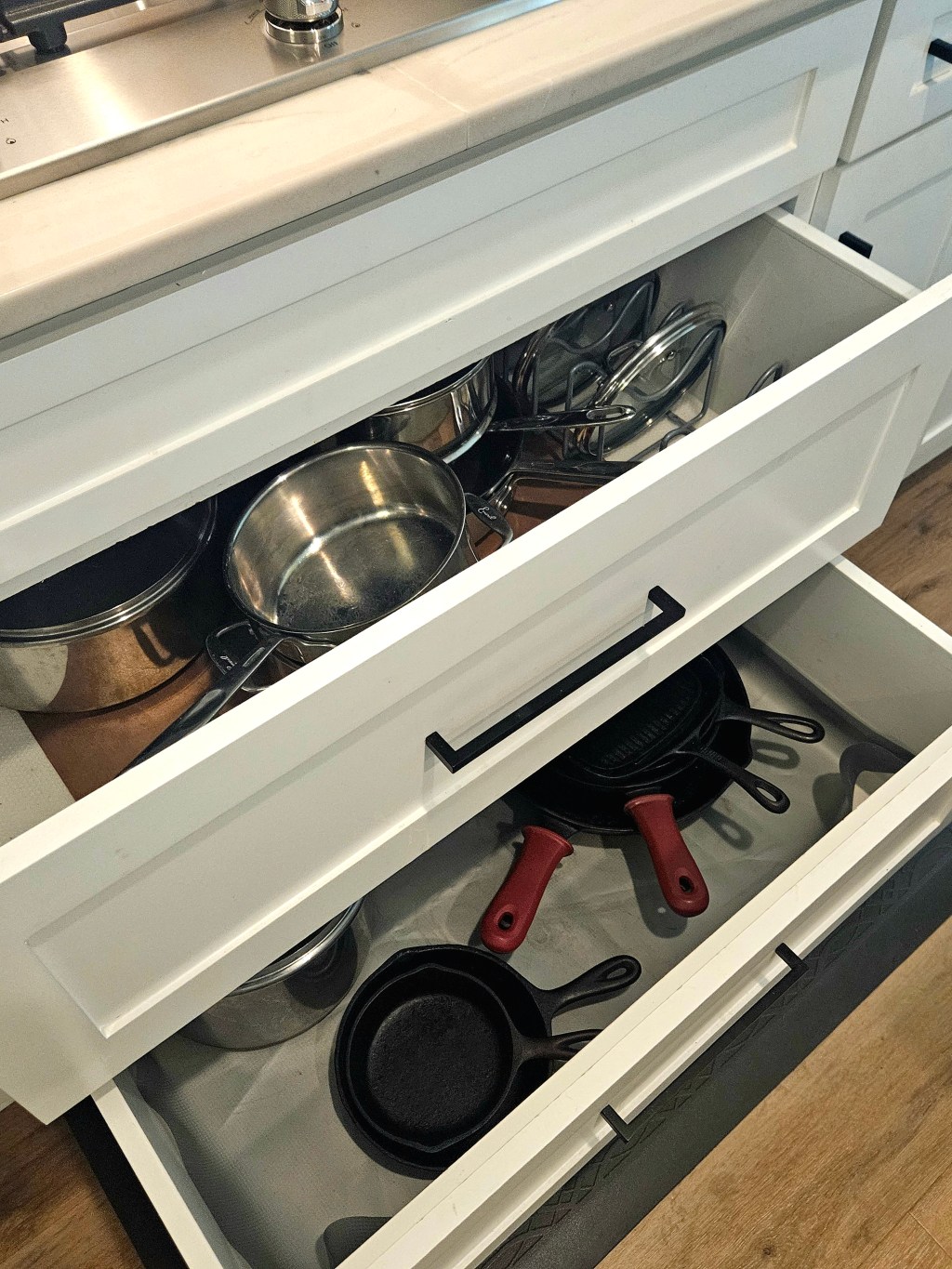
I knew what to do to cut the power, but the outlet was hidden behind two deep, very wide drawers, filled with heavy pots and pans.
I couldn’t get them out. I tried.
I emptied. I reached across. Nothing.
I panicked. Cried. Prayed.
In that order.
I called my husband (who was on the road) and asked for instructions. He calmly began talking me through. But I needed brevity. To the point.
The clicking got faster. Popping followed, flames flaring.
My mind raced ahead: this is how it happens. This is how everything is lost.
I ran to the garage and shut off the breaker.
Whew!
Smoke lingered, but rested. And the house stood.
I cried again, tears of gratefulness and relief.
As very often happens in my heart at this age, I heard a message loud and clear: ignored brokenness doesn’t stay contained.
It waits. It builds. It strains.
And eventually—it demands our attention.
Not just in appliances. But in us. In our relationships. In the quiet places we’ve learned to avoid.
We tell ourselves we are fine.
We adapt. We cope. We get by.
But getting by has a cost.
What we don’t address doesn’t disappear—it leaks. It shapes how we love, how we trust, how we respond under pressure.
It shows up when the heat is on.
Psalm 51 says, “Create in my a clean heart, O God…a contrite heart You will not despise.”
God isn’t asking for perfection—He’s asking for access. And access requires space.
The drawers underneath my stovetop? They were too wide and heavy—too full for me to reach what I needed.
So here’s the question: what’s filling your drawers?
Pride? Fear? Distraction? The pace you refuse to slow down?
You can keep working around it. You can keep managing symptoms.
But is getting by really what you want when God offers made fully new?
“Therefore, if anyone is in Christ, he is a new creation…”
2 Corinthians 5:17.
Not patched. Not managed. Not barely holding it together.
Made new…
And being made new—well, that requires surrender. And surrender is a long and short game, every day. Forever.
These words aren’t meant to shame you or condemn you. I hope they encourage you—move you forward. Give you courage to do the hard stuff now, instead of waiting for sparks to fly.
And if you already suspect an issue…
If you know full well something is on the fritz…
Empty the drawers. Reach for help.
Choose something better than just getting by.
Choose made fully new.



Leave a Reply